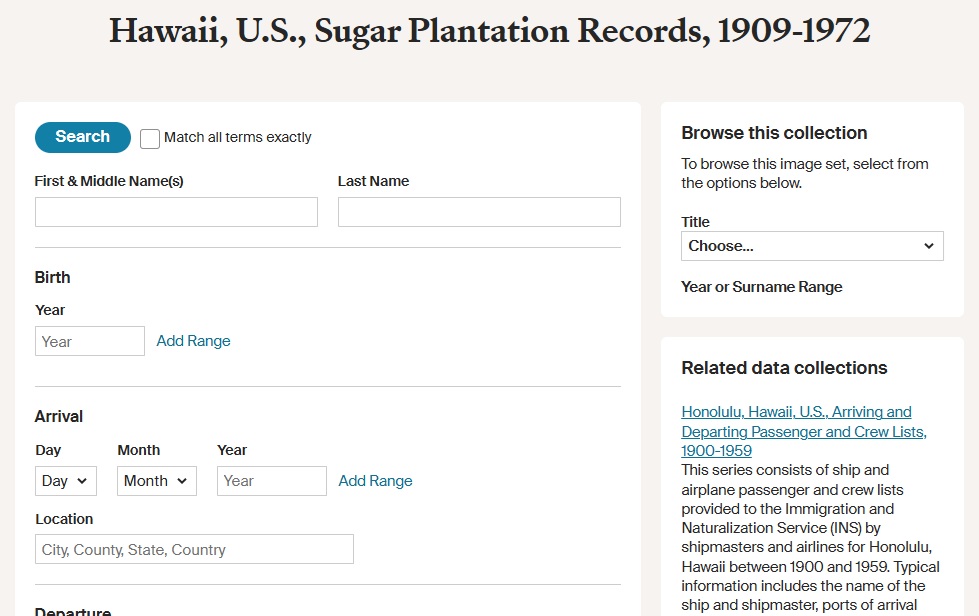
Thanks to my dissertation work, I have had the opportunity to work extensively with a number of archives that feature the lives and legacies of the Sakadas, migrant sugar plantation workers who became part of the early wave of labor migration of Filipinos from the Philippines to Hawaiʻi, the US West Coast, and beyond. Thanks to this, I was approached earlier this year by Ancestry.com to be part of their Cultural Advisory Panel, especially when it comes to Filipino American history. I was able to collaborate with them to work on their new collection: Hawaii, U.S., Sugar Plantation Records, 1909-1972, courtesy of the BYU-Hawaii Archives. This digital archive, available for free on Ancestry, documents a pivotal era of labor migration, capturing the stories of more than 125,000 Filipinos—known as Sakadas—who journeyed to Hawaiʻi to fuel the islands’ booming sugar industry in the 20th century. Here is an excerpt from their blog article:
“There was a racialized order and hierarchy to the plantations,” shares Dr. Adrian Ellis Alarilla, an independent writer and researcher who specializes in Filipino labor migrations. “Certain ethnicities were assigned to particular roles, and the Filipinos, as the latest wave of labor migrants, were assigned the toughest jobs, were compensated the least, and were assigned to the most spartan housing arrangements.”
Ultimately, these women and families fostered the vibrant Filipino communities and support networks essential for cultural preservation. “This is an important record collection not only for tracing family histories but also for highlighting the significance of Filipino migrant women,” states Dr. Alarilla.

